
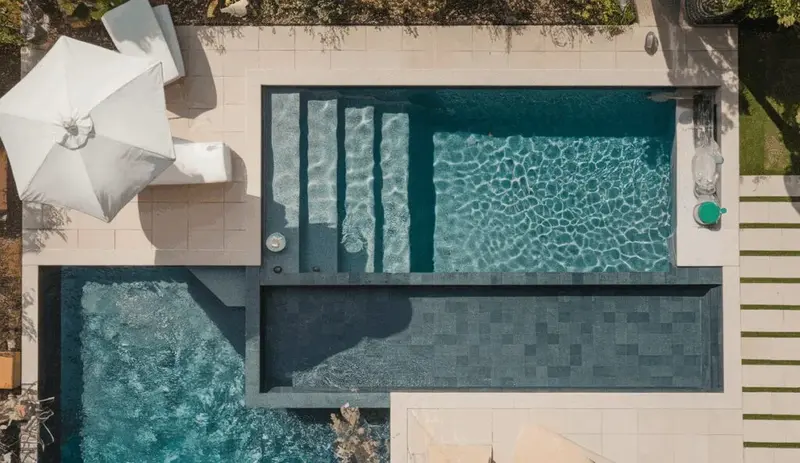
You’re dreaming of the perfect swimming pool, and you know tiles can make or break the entire look and feel of your backyard oasis. But with so many options out there, how do you choose the right tiles that will look amazing, stay safe, and last for years?
At Leisure Living Pools, we’ve been helping homeowners navigate pool design choices for decades. We understand that tile selection isn’t just about aesthetics it’s about creating a beautiful, functional space that your family will enjoy for years to come.
Why the Tile Decision Matters
Tiles do a lot of quiet jobs. They decide how water looks when it hits the wall. They give you color choices that set the mood of the pool. At the same time, how the material reacts to water, chemicals, and people walking on it decides if the pool will survive everyday use.
Safety factors like slip-resistance and how hot the tile gets are also built into the tile itself. In Dallas, TX, where summers can be intense, choosing the right pool tile becomes even more critical for comfort and durability.
Ceramic Tiles for DFW Swimming Pools
Ceramic tiles are popular because they give you a mix of style, function, and price. Some of their main points are:
- Water proof – the glaze stops water getting into the tile, so less chance of damage.
- Lots of colors and patterns – you can get classic little mosaics or modern geometric prints.
- Cheap enough – most places sell them for $5‑$30 a square foot, so you can look nice without spending a fortune.
- Easy to clean – just a mild soap and a mop usually keep them bright.
If you want a look that’s both cool and cheap, ceramic is a solid first pick. At Leisure Living Pools, we often recommend ceramic for budget-conscious homeowners.
Natural Stone – Fancy Look with Extra Work
Stone tiles like marble, travertine, or slate bring a real-life luxury feel that fake materials can’t copy. The downside is they need more care:
- Porous – stone soaks up water more than ceramic, which can let chemicals damage it.
- Needs sealant – you have to apply a good seal every now and then, which costs time and money.
- More upkeep – even with sealing you’ll have to deep-clean and check for stains regularly.
Stone works best if you love the natural look and are ready to put in the extra effort.
You May Like To Read: Can A Pool Be Included In A Construction Loan in Dallas?
Porcelain – Modern Mix of Style and Strength
Porcelain tiles try to give you the best of both worlds – the look of stone, the strength of ceramic. Their main features:
- Super water tight – the tile is dense, almost no water gets in.
- Very tough – it won’t crack or chip easily, and chemicals don’t wear it down much.
- Low maintenance – smooth surface means just regular neutral cleaning is fine.
- Design options – manufacturers can copy stone, wood, or make intricate patterns.
Prices usually sit at $10‑$40 a square foot, right between ceramic and stone while giving more durability.
Safety Things You Can’t Ignore
A pretty pool is great, but it must be safe too. Look for tiles that have these safety traits:
- Textured surface – a light emboss can keep feet from slipping when wet.
- Good slip rating – tiles with a COF of .6 or higher are considered safe.
- Rounded edges – no sharp corners that could cut someone.
- Light colors – pale tiles reflect sun, so they stay cooler and don’t burn feet.
Also, remember that pool projects get booked fast in summer. Ordering tiles and setting up installers early helps avoid pricey delays.
Money Talk: What You Pay vs. What You Get
Knowing the cost of each tile helps you pick what fits your budget. Rough averages per square foot:
- Ceramic: $5‑$30
- Porcelain: $10‑$40
- Natural stone: $20‑$50
Stone costs the most at first, but some folks think the look is worth it. Porcelain may cost a bit more than ceramic, but its long life can save money on repairs.
Bottom Line
Picking pool tiles is more than a quick glance at a catalogue. You need to juggle style, safety, and spendings. By comparing ceramic, natural stone, and porcelain – and keeping slip-resistance, heat, and timeline in mind – you can end up with a pool that looks good and stays solid for years.
Take time to look at options, talk to a good installer, and plan ahead – a bit of effort now means a happy splash later.
Choosing the right tiles for your swimming pool involves balancing aesthetics, safety, durability, and budget.
By considering factors like material properties, maintenance requirements, and long-term value, you can select tiles that will create a stunning and functional pool area for years to come.