
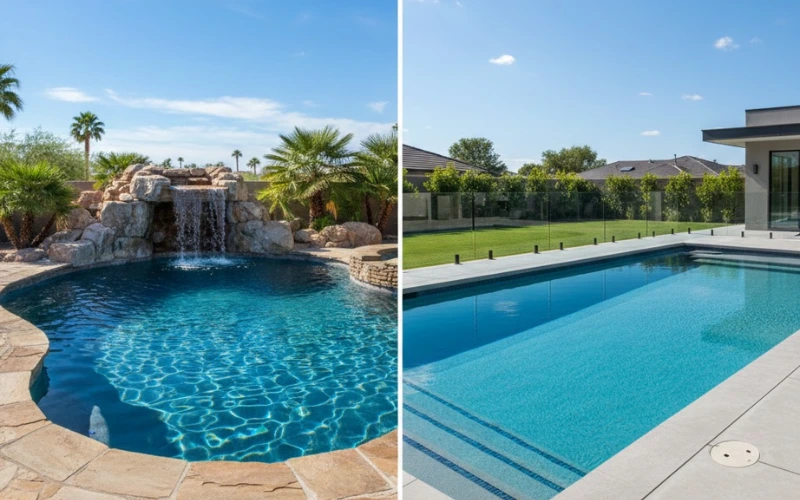
Deciding between gunite and fiberglass is probably the biggest choice you’ll make when building a pool. Both have loyal fans, and honestly, both can be great depending on your situation. After building pools in Dallas, Plano, and Frisco since 1980, here’s what we’ve learned about what works long-term in North Texas.
The real answer? It depends on what matters most to you – customization, speed, budget, or long-term durability. Let’s break down the key differences so you can make the right choice for your backyard.
What’s The Actual Difference?
Gunite pools are built on-site from concrete. We excavate your yard, build a steel framework, spray concrete (gunite), then finish it with plaster or pebble. You get exactly the shape, size, and features you want.
Fiberglass pools are pre-made shells manufactured in a factory. The shell gets delivered on a truck, a crane lowers it into the excavated hole, and we connect the plumbing. Fast and straightforward.
Why Gunite Is the Ultimate Custom Pool Option
The biggest advantage of gunite is total freedom. Want an L-shaped pool with a beach entry, built-in spa, and waterfall? No problem. Need it to fit around your tree, deck, or weird yard shape? We design around it.
Gunite also lasts forever. A properly built gunite pool can go 50+ years. When the surface wears out in 10-15 years, you just resurface it. The structure underneath stays solid indefinitely. We’ve renovated pools from the 1970s that are still going strong.
The downside? Time and money. Gunite pools take 10-12 weeks to build because we’re constructing from scratch. They also cost more upfront – typically $50,000 to $100,000+ depending on size and features. Plus they need more maintenance than fiberglass. The plaster surface is slightly porous, so you’ll brush more and watch chemistry closer.
Fiberglass: The Quick Option
Fiberglass wins on speed. Your pool shell arrives ready-made and gets installed in 2-3 weeks. The smooth gelcoat surface resists algae better than plaster, so you use fewer chemicals and do less scrubbing.
Cost is usually lower too – generally $40,000 to $70,000 installed. And you won’t need to resurface for 20-25 years versus 10-15 for gunite.
But here’s the catch: you’re limited to whatever shapes the manufacturer offers. Most fiberglass pools max out around 16 feet wide and 40 feet long because they have to fit on trucks. Custom curves, unique depths, or future additions like spas? Not happening with fiberglass.
Access can be a problem too. If you have a narrow gate or tight side yard, that giant shell might not fit. Cranes can sometimes help but add cost.
You May Like To Read: Best Pool Builders In Dallas, TX (2026 Guide)
Which Works Better In Texas?
North Texas soil is brutal. Our clay expands when wet and contracts when dry. Gunite handles this movement better because it’s flexible and can be repaired easily. Fiberglass shells are rigid – if the ground shifts wrong, they can crack or even pop out of the ground if installed improperly.
The heat matters too. Texas summers and occasional hard freezes are tough on pools. Gunite’s durability handles our climate extremes better over decades.
Most Dallas homeowners choose gunite for these reasons, plus the customization. In higher-end areas like Plano and Frisco, buyers expect custom pools, which affects resale value.
Our Honest Take
We specialize in gunite because it lets us build exactly what you envision. As a family business, we like creating pools that last generations. But if fiberglass genuinely makes more sense for your situation, we’ll tell you.
The worst choice is the wrong pool type for your needs. Talk to owners of both types, look at real examples, and think about how you’ll actually use your pool.
Ready To Decide?
Call (972) 335-2777 and we’ll visit your property for a free consultation. We’ll assess your space, discuss your vision, and recommend the best option honestly – whether that’s gunite, fiberglass, or something else entirely.
Leisure Living Pools
✉️ info@leisurelivingpools.com
📍 Dallas, Plano, Frisco & North Texas