
Here’s a conversation I’ve had dozens of times over the years. A couple comes in, we walk their backyard, we talk through exactly what they want, and they love the design. Then comes the pause. “This is a lot of money, Scott. How do people actually pay for this?”
It’s a fair question – and an important one. A custom pool in DFW is a real investment. Depending on size and features, you’re typically looking at somewhere between $65,000 and $175,000+. Most people don’t have that sitting in a checking account, and they shouldn’t have to.
The good news: there are several solid financing options available to North Texas homeowners right now, and the right one depends on your specific situation – your equity, your credit, your timeline, and how much you want to roll into a monthly payment. I covered the actual cost numbers in detail in our pool pricing breakdown, so if you haven’t read that yet, start there. This post is about how to pay for it once you know what you’re building.
Bottom line upfront: Most of our clients finance through a HELOC, a home equity loan, or an unsecured pool loan. Each has real trade-offs. I’ll walk through all of them honestly — including what to watch out for — so you can make the right call for your family.
Why Financing a Pool Is Usually a Smart Move
Before I get into the options, I want to address something I hear occasionally: “We want to wait until we can pay cash.“
I understand the instinct. But here’s the reality after 45 years in this business: construction costs, material prices, and permit fees in DFW have moved consistently upward. The pool you build today almost always costs less than the pool you build in three to five years. When you factor in the enjoyment your family gets in the meantime, financing at a reasonable rate often makes more financial sense than waiting.
On top of that, a well-built pool adds measurable value to your home. In the DFW market, a quality custom pool typically increases property value by $25,000–$50,000+ depending on neighborhood and design. You’re not just spending money — you’re converting it into a long-term asset.
💡 Tip: The highest-return pool is the one your family actually uses for 20 years. If financing gets you there sooner, it’s worth considering carefully. See our portfolio of completed projects to get a feel for what’s possible at different investment levels.
The 6 Best Ways to Finance a Custom Pool in DFW
1. Home Equity Line of Credit (HELOC)
This is the most common financing method we see among our clients, and for good reason. If you’ve been in your home for several years and have equity built up, a HELOC lets you borrow against that equity at relatively low interest rates compared to unsecured options.
How it works: Your lender establishes a credit line based on your home’s value minus what you owe. You draw from it as needed during the build — which works well for construction projects since costs come in phases rather than all at once. During the draw period (typically 5–10 years) you’re usually paying interest only. Then you repay the principal over the repayment period.
What I tell clients: HELOCs have variable rates, which means your payment can change as market rates move. In a stable or declining rate environment that’s not a concern. In a rising rate environment it’s something to model out before you commit.
- Best for: Homeowners with strong equity (typically 20%+ after the loan) and good credit
- Typical rate range (2026): 7–9% variable
- Key advantage: Flexible draw schedule aligns well with construction timelines
- Watch out for: Variable rate risk; confirm your lender has experience with construction draws
2. Home Equity Loan (Fixed Rate)
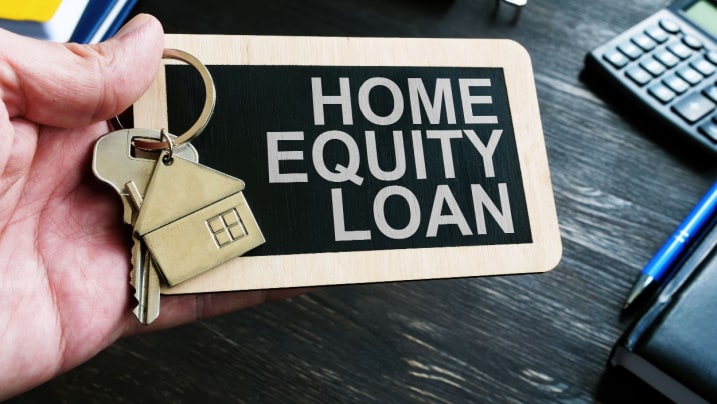
A home equity loan is the fixed-rate cousin of the HELOC. Instead of a flexible credit line, you borrow a lump sum at a fixed interest rate and repay it over a set term — typically 10–20 years. Your monthly payment never changes, which makes budgeting straightforward.
For homeowners who are uncomfortable with variable rates or who want the discipline of a predictable payment, this is often the better choice over a HELOC even if the initial rate is similar.
- Best for: People who want payment certainty and plan to keep the home long-term
- Typical rate range (2026): 7–9% fixed
- Key advantage: Predictable payments for the life of the loan
- Watch out for: Slower to close than a HELOC; you receive funds in a lump sum, not draws
→ We have a full article specifically on including a pool in a construction loan in Dallas — if you’re building a new home and adding a pool simultaneously, that’s a different structure worth understanding.
3. Unsecured Pool Loan

If you haven’t built up significant equity — maybe you bought your home recently — an unsecured personal loan from a pool financing specialist is another solid option. Several lenders focus specifically on home improvement and pool loans, with approvals that can come through in 24–48 hours.
The trade-off is rate. Because there’s no collateral backing the loan, interest rates are higher than home equity products. Depending on your credit score, you’re typically looking at 9–14% in the current environment. That said, for a $80,000–$100,000 pool, the difference in monthly payment versus a HELOC is often smaller than people expect.
- Best for: Newer homeowners with limited equity but strong credit and income
- Typical rate range (2026): 9–14% fixed
- Key advantage: Fast approval, no home equity required
- Watch out for: Higher rates; check origination fees, which can be 1–5% of the loan amount
4. Cash-Out Refinance
A cash-out refinance replaces your existing mortgage with a new, larger one — and you pocket the difference to pay for the pool. This was an extremely popular option a few years ago when mortgage rates were near historic lows and many homeowners could refinance into a lower rate while pulling equity.
In today’s rate environment (mid-to-high single digits for most borrowers), a cash-out refi makes less sense if you already have a low-rate mortgage from a few years back. Resetting a 3% mortgage to fund a pool at 7% is a math problem you need to run carefully.
- Best for: Homeowners with older mortgages at rates comparable to or above today’s market
- Typical rate range (2026): 6.5–8% (30-year fixed)
- Key advantage: Single consolidated payment; potentially simplifies finances
- Watch out for: Resets your mortgage term; not smart if you have a sub-4% existing rate
⚠️ If you have a mortgage rate below 5%, run the full math before considering a cash-out refi. In most cases, a HELOC or home equity loan preserves your existing mortgage while still accessing your equity.
5. Construction Loan (Building Pool With a New Home)

If you’re building a new home and adding a pool at the same time, a construction loan is specifically designed for that scenario. It funds both the home and the pool in a single loan, which then typically converts to a standard mortgage at project completion. We have a full guide on how pool construction loans work in Dallas that covers this in detail.
- Best for: New construction projects where pool is planned from the start
- Key advantage: One loan, one closing, one payment for both home and pool
- Watch out for: More complex approval; requires detailed plans and contractor documentation upfront
6. Contractor Financing
We work with select financing partners who specialize in home improvement lending. The advantage is convenience — one point of contact, no need to shop lenders separately, and we know the process. The rate varies based on your credit profile and the partner’s current offerings. You can see current options on our financing page.
- Best for: Clients who want a simplified, one-stop experience
- Key advantage: Familiar process; we’ve seen these loans work hundreds of times
- Watch out for: Always compare against your bank’s HELOC rate before deciding — know your baseline
Here’s how the options compare at a glance:
| Financing Option | Typical Rate (2026) | Best For | Key Watch-Out |
|---|---|---|---|
| HELOC | 7–9% variable | Homeowners with strong equity | Rate is variable — rises with market |
| Home Equity Loan | 7–9% fixed | Those who want predictable payments | Closes slower than HELOC |
| Unsecured Pool Loan | 9–14% fixed | Newer homeowners, fast approval | Higher rate; check origination fees |
| Cash-Out Refinance | 6.5–8% fixed | Low current mortgage rate owners | Resets your entire mortgage term |
| Construction Loan | Varies | Building pool with new home | More complex approval process |
| Contractor Financing | Varies by partner | One-stop simplicity | Compare against bank offers first |
How Much Will the Monthly Payment Actually Be?
This is the number most homeowners really want to know. Let me give you some real figures.
On a $100,000 pool loan financed over 15 years at 8% interest:
- Monthly payment: approximately $956/month
- Total interest paid over 15 years: approximately $72,000
On the same $100,000 at 10% (unsecured loan):
- Monthly payment: approximately $1,075/month
- Total interest over 15 years: approximately $93,500
On a $130,000 pool at 8% over 20 years:
- Monthly payment: approximately $1,087/month
- Total interest over 20 years: approximately $130,900
The actual cost of your project depends on size and features. I covered all of that in our 2026 pool cost breakdown for DFW — read that first if you haven’t already, so you know what range you’re working with before talking to a lender.
💡 Tip: Get pre-qualified before you get a pool quote. Knowing your approved amount and rate puts you in a much stronger position when discussing your design options. It also means we can design to your actual budget, not a moving target.
What Lenders Look At When You Apply

If you haven’t applied for a home equity product or personal loan recently, here’s what lenders are evaluating:
Home Equity Products (HELOC & Home Equity Loan)
- Loan-to-Value (LTV): Lenders typically want your combined debt (existing mortgage + new loan) to be no more than 80–85% of your home’s current appraised value
- Credit score: Most lenders want 680+ for competitive rates; 740+ for the best terms
- Debt-to-income ratio: Your total monthly debt payments (including the new pool payment) should ideally be under 43% of gross monthly income
- Current appraisal: Your lender will order an appraisal of your home. In DFW’s current market, most homes have appreciated significantly since purchase
Unsecured Pool Loans
- Credit score: 700+ gets you competitive rates; below 650 and options narrow significantly
- Income verification: Lenders want to see stable, documentable income — W-2s, tax returns, or business financials for self-employed borrowers
- Existing debt: Debt-to-income under 40% is generally required
💡 Tip: If your credit score is 700–720 and you have good equity, you’re likely in good shape for a HELOC. If it’s below 680, consider working with a mortgage broker who can present your profile to multiple lenders simultaneously.
Timing: Does When You Finance Affect Your Cost?
It can — both in terms of interest rates and construction costs. Here’s what I’ve seen play out over 45 years:
Interest rates move in cycles. When rates are high (like 2023–2024), more homeowners use equity products because their existing mortgages are locked in low. When rates fall, refinancing options become attractive again. The best time to finance is when the math works for your specific situation — not when some general market condition says so.
Construction costs, on the other hand, have moved in one direction in DFW: up. Labor, materials, permitting fees — all of it costs more than it did five years ago. If you’re trying to time a lower pool cost, you’re likely waiting for something that historically hasn’t happened in this market.
I cover seasonal timing more in depth in our post on the best time of year to build a pool in Texas — which also affects when you can break ground and how that interacts with your financing draw schedule.
Pool Financing and Your Home’s Value in DFW
One question I get from financially-minded homeowners: “Is a pool actually a good investment?”
The honest answer is: it depends on the neighborhood and the pool. A well-designed custom pool in Frisco, Plano, Allen, or Southlake typically adds meaningful value — these are communities where outdoor living spaces are expected at the higher price points and actively sought by buyers. A pool that looks like an afterthought, or one that overwhelms a small yard, can be neutral or mildly negative.
The pools we build are designed to complement the home and the outdoor space. That’s why we do a full design consultation before any construction starts. A pool that belongs in a yard — architecturally and proportionally — is a different asset than one that was just dropped in.
You can browse our portfolio of completed DFW projects to see how we approach design across different lot sizes and home styles. And our awards page reflects recognition from the industry for projects built right.
What About Financing a Pool Remodel?
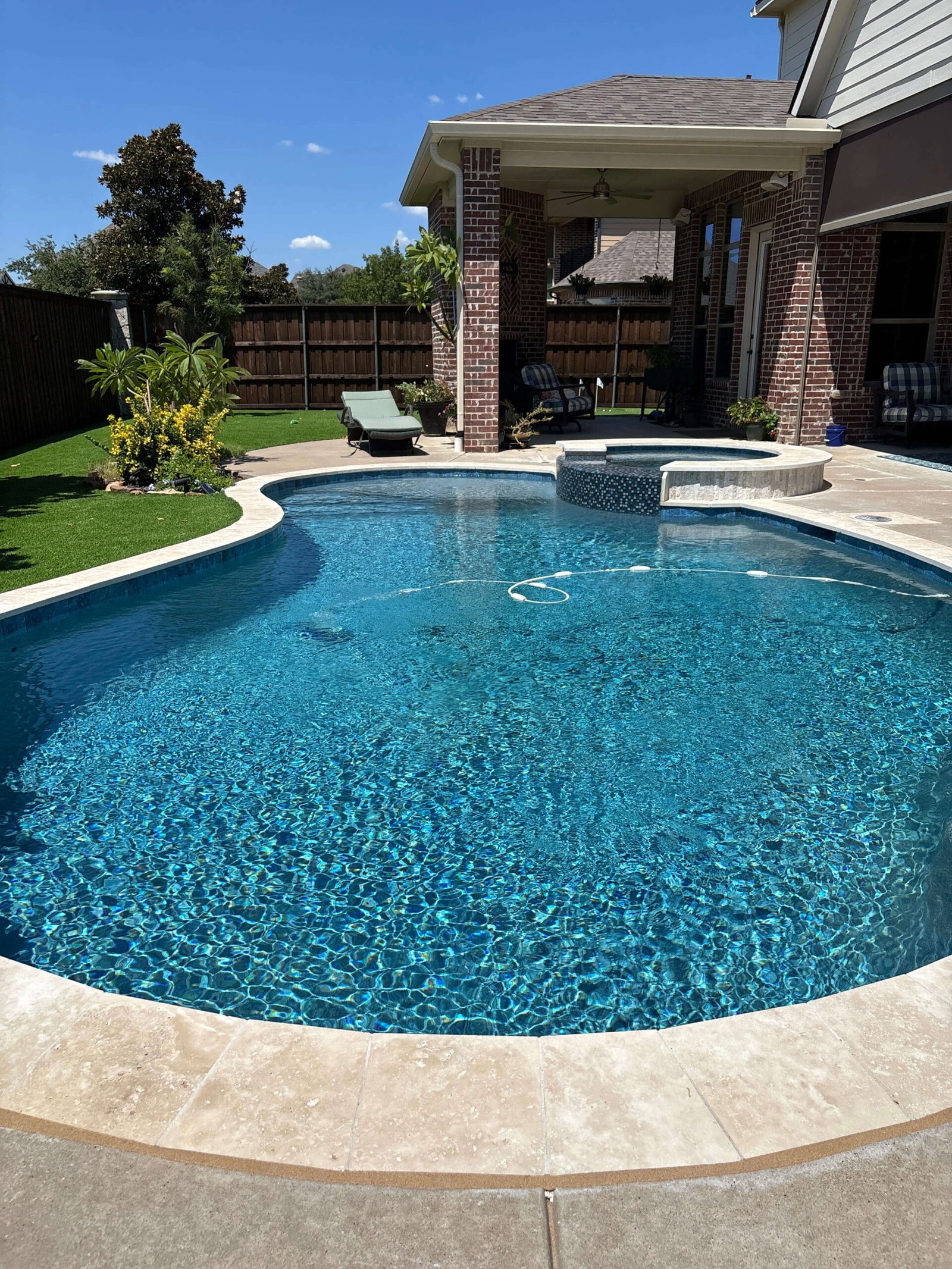
The financing options for a remodel are essentially the same as for new construction — HELOC, home equity loan, unsecured loan — but the loan amounts are typically smaller. A significant remodel in DFW usually runs $30,000–$80,000. I cover what remodels actually cost in our pool remodel cost guide for Texas.
One thing worth noting: if you’re financing a remodel on a pool you already own, you’ve likely had more time to build equity since your original purchase. That often means home equity products are more accessible — and at better rates — than they were when you bought the home.
Questions to Ask Any Lender Before You Sign
Whether you go through your bank, a credit union, or a pool financing specialist, ask these questions before you commit:
- What is the APR? — Not just the rate. The APR includes fees and gives you a true cost comparison across lenders
- Is the rate fixed or variable? — Know exactly what happens to your payment if rates move
- What are the origination and closing fees? — A “0% origination fee” loan at 12% may be worse than a 2% fee loan at 9%. Do the full math
- Is there a prepayment penalty? — If you come into money and want to pay it off early, you shouldn’t be penalized for it
- How do draws work? — For construction projects, confirm how and when funds are released to the contractor
- How long does approval take? — This affects your build timeline. A 30-day approval process matters if you’re trying to get in the ground before summer
One More Thing: Financing Affects When You Can Start
This is a practical point that people sometimes miss. Your financing approval needs to come through before we can lock in your build slot on our schedule. The design and quoting process can begin while your financing is in progress — but we can’t hold a construction start date without it. If you’re aiming to have your pool ready by a specific date, work backwards from that target and account for the financing timeline. Our pool construction timeline guide walks through the full schedule in detail.
And if you’re still in the early research phase, our Texas inground pool cost guide and the gunite vs. fiberglass comparison are good places to get grounded on what your dollars buy before you talk to a lender.
Ready to Talk Numbers?
If you’re at the point where you’re thinking seriously about financing, you’re probably ready to get a real quote. That’s where the conversation with us starts — with a site visit, a design discussion, and an honest number you can take to a lender.
We’ve been building pools in Frisco, Plano, Dallas, McKinney, and across DFW since 1980. We work with homeowners at every budget level, and we’re happy to talk through financing options alongside the design conversation.
Call us at (972) 335-2777 or schedule a consultation online. Bring your questions about financing — we’ve answered all of them before.