
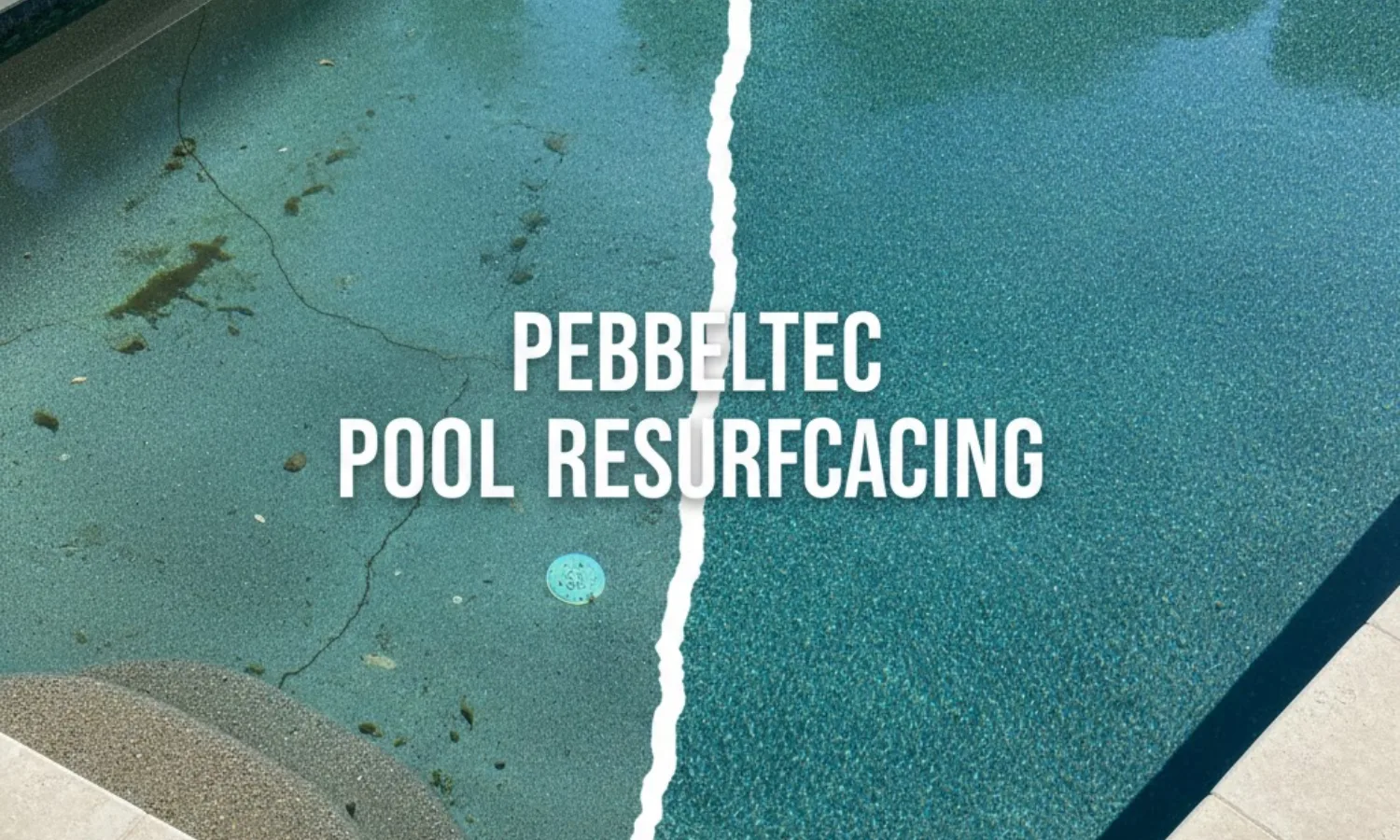
I have a particular connection to PebbleTec that goes back a long way. When my father Tom was building pools in DFW in the early 1980s, PebbleTec was a new technology – an aggregate finish that was dramatically more durable, more beautiful, and more resort-feeling than the standard white plaster virtually everyone else was using. Tom became one of the first certified PebbleTec applicators in North Texas.
That certification is something we still take seriously. We’ve been applying PebbleTec finishes in this market for over four decades. I know what a good application looks like, what a bad one looks like, and what that difference means ten years into a pool’s life. So when homeowners ask whether PebbleTec is worth it for a resurfacing project – I’m the right person to answer.
What Is PebbleTec, Exactly?
PebbleTec is a pool finish made from a mixture of exposed pebble aggregate, cement, and pigment. Unlike standard plaster – which is a smooth white or colored cement coat — PebbleTec has texture from small stones exposed during the finishing process. The result is a surface that looks natural, holds color beautifully, and resists the staining and etching that white plaster is so prone to.
There are several product lines within the PebbleTec family: the original PebbleTec (larger aggregate, more texture), Pebble Sheen (finer aggregate, smoother underfoot), and Pebble Fina (the finest aggregate, very smooth — almost like enhanced plaster with subtle aggregate). Each has a slightly different look and feel.
| Finish Type | Texture | Look | Lifespan | Best For |
|---|---|---|---|---|
| Standard Plaster | Smooth | Classic white/tinted | 10–15 years | Budget-conscious builds |
| Quartz Plaster | Smooth | Slightly richer | 15–20 years | Mid-range upgrade |
| Pebble Fina | Very smooth | Refined, subtle | 20–25+ years | Smooth feel preference |
| Pebble Sheen | Moderate | Rich color, natural | 20–25+ years | Most popular choice |
| PebbleTec | Textured | Bold, resort-style | 25+ years | Dramatic look, high durability |
How PebbleTec Resurfacing DFW Colors Affect Your Pool Water
This is something most homeowners don’t fully appreciate until they see it: the color of your pool finish dramatically changes the color of the water, and the water color is what you actually look at every day.
A bright white or light gray finish creates a classic blue-water look — the color most people grew up associating with pools. Darker finishes — deep blues, gray-greens, charcoals — create dramatically richer water colors. A dark charcoal finish can make the water appear almost tropical, a deep blue-green that photographs beautifully and looks stunning against travertine decking.
- White or light gray: Classic bright blue water. Timeless but shows staining and calcium buildup more readily
- Medium blue or teal: Rich medium blue water. The most popular choice in DFW right now — depth without going too dark
- Dark blue or gray-green: Dramatic, tropical-looking water. Shows debris more than lighter finishes but the visual impact is extraordinary
- Warm tan or brown aggregate: Creates a lagoon effect. Beautiful in naturalistic freeform pool designs
I always recommend seeing color samples submerged in water before committing — the dry sample in a brochure looks nothing like the finish underwater. We show clients actual pool photos in the colors they’re considering, because that’s the honest representation.
How Long Does PebbleTec Last?
A properly applied PebbleTec finish in North Texas lasts 25+ years with normal maintenance. This isn’t marketing language – I’ve seen our applications from the 1990s still looking good. Improper water chemistry is the primary enemy of any pool finish, including PebbleTec. Running your pool at the wrong pH or calcium hardness levels for extended periods shortens the life of any surface.
Standard white plaster, by comparison, typically lasts 10–15 years before it becomes rough, stained, or structurally compromised. Many homeowners have resurfaced their pools two or even three times in the same period one PebbleTec application would have lasted.
Worth knowing: Good water chemistry habits protect your surface investment regardless of finish type. Our guide on keeping your pool clean in Dallas covers the fundamentals of ongoing maintenance that extend any finish’s lifespan.
What Does PebbleTec Resurfacing Cost in DFW?
Resurfacing costs depend on pool size, the condition of the existing surface (old plaster needs to be chipped off or prepped), and which PebbleTec product you choose.
| Pool Size | Standard Plaster | PebbleTec / Pebble Sheen |
|---|---|---|
| Small (300–400 sf) | $6,000 – $10,000 | $9,000 – $14,000 |
| Medium (400–550 sf) | $8,000 – $13,000 | $12,000 – $18,000 |
| Large (550–750 sf) | $11,000 – $17,000 | $16,000 – $24,000 |
| + Spa | Add $1,500–$3,000 | Add $2,000–$4,000 |
The price difference between standard plaster and PebbleTec is real — typically $3,000–$6,000 more depending on pool size. But comparing the premium against the cost of replastering in 10–12 years vs. a surface that lasts 25+, the math strongly favors PebbleTec on total cost of ownership.
What Does the Resurfacing Process Look Like?
A PebbleTec resurfacing typically takes 1–2 weeks from start to swim-ready, depending on pool size and cure time. Here’s the general sequence:
- Day 1–2: Pool drained, existing surface chipped away (if old plaster) or prepped for new application
- Day 3–4: Shell repairs and plumbing inspection; bond coat applied
- Day 5–6: PebbleTec applied and finished by our certified crew
- Day 7–10: Pool filled; initial chemical startup performed; water chemistry carefully balanced
- Day 10–14: Pool ready for regular use once chemistry stabilizes
The startup chemistry phase is critical and often rushed by contractors who don’t know what they’re doing. The first two weeks of water chemistry after a PebbleTec application directly affect how the surface cures and how long it ultimately lasts. We take that part seriously — and we follow up to make sure the chemistry is dialed in before we consider the job finished.
Tip: Always confirm your contractor is a certified PebbleTec applicator before signing. The certification exists for a reason – application technique matters and uncertified work voids the product warranty.
Should You Combine PebbleTec Resurfacing With Other Pool Renovations?
Yes – and you should, if other work is needed. Any time the pool is drained for resurfacing, it’s the ideal time to handle other improvements that require an empty pool: replacing the tile and coping, adding or repairing water features, upgrading lights, or repairing any plumbing. Draining a pool twice is expensive and wastes water. Plan the full scope of renovation before draining once.
Our guide to modernizing an outdated pool in North Texas covers the full menu of upgrades worth combining with a resurfacing project and how to prioritize them within a budget.
Is PebbleTec Worth It?
In my experience: almost always yes, unless you’re planning to sell the home in the near term and just need a cosmetic fix.
If you’re staying in the home, PebbleTec delivers better aesthetics, better durability, lower lifetime cost, and a surface your guests will notice and comment on. If you’re also considering other remodel work at the same time, it makes sense to plan it all together so you’re not draining and refilling the pool multiple times. Our remodel vs. replace guide covers how to think about the full scope of a pool renovation.
Want a Quote on PebbleTec Resurfacing?
We’ve been certified PebbleTec applicators in DFW since before most of our competitors were in business. If your surface is showing its age, let’s take a look.
Call us at (972) 335-2777 or reach out online to schedule a site visit. We’ll assess the existing surface, tell you what prep work is needed, and give you an honest quote.