If you’re planning a custom pool in Dallas, you’ve probably wondered whether to add an attached spa. The short answer: it depends on your backyard layout, how you’ll actually use the space, and whether you want year-round water access without building two separate structures.
Here’s what you need to know about designing and building an integrated pool-and-spa combo in North Texas.
What a Pool and Spa Combo Actually Costs in Dallas
An attached spa typically adds $15,000–$35,000 to your pool project, depending on size, materials, and features. That’s less than building a standalone spa later because we’re sharing plumbing, equipment, and excavation work.
| Spa Feature | Cost Range |
| Basic attached spa (4–6 seats, shared equipment) | $15,000–$22,000 |
| Mid-range spa with spillover, upgraded jets, tile accents | $22,000–$30,000 |
| Premium spa with stone coping, custom tile, fire bowls, separate heater | $30,000–$40,000+ |
| Standalone spa added later (separate excavation, plumbing, decking) | $25,000–$45,000+ |
The numbers vary based on whether you want a separate heater for the spa, whether you’re adding a spillway or waterfall connection, and what finish materials you choose. If you know you want both a pool and a spa, building them together saves money and creates better visual flow.
How an Attached Spa Changes Your Backyard Layout
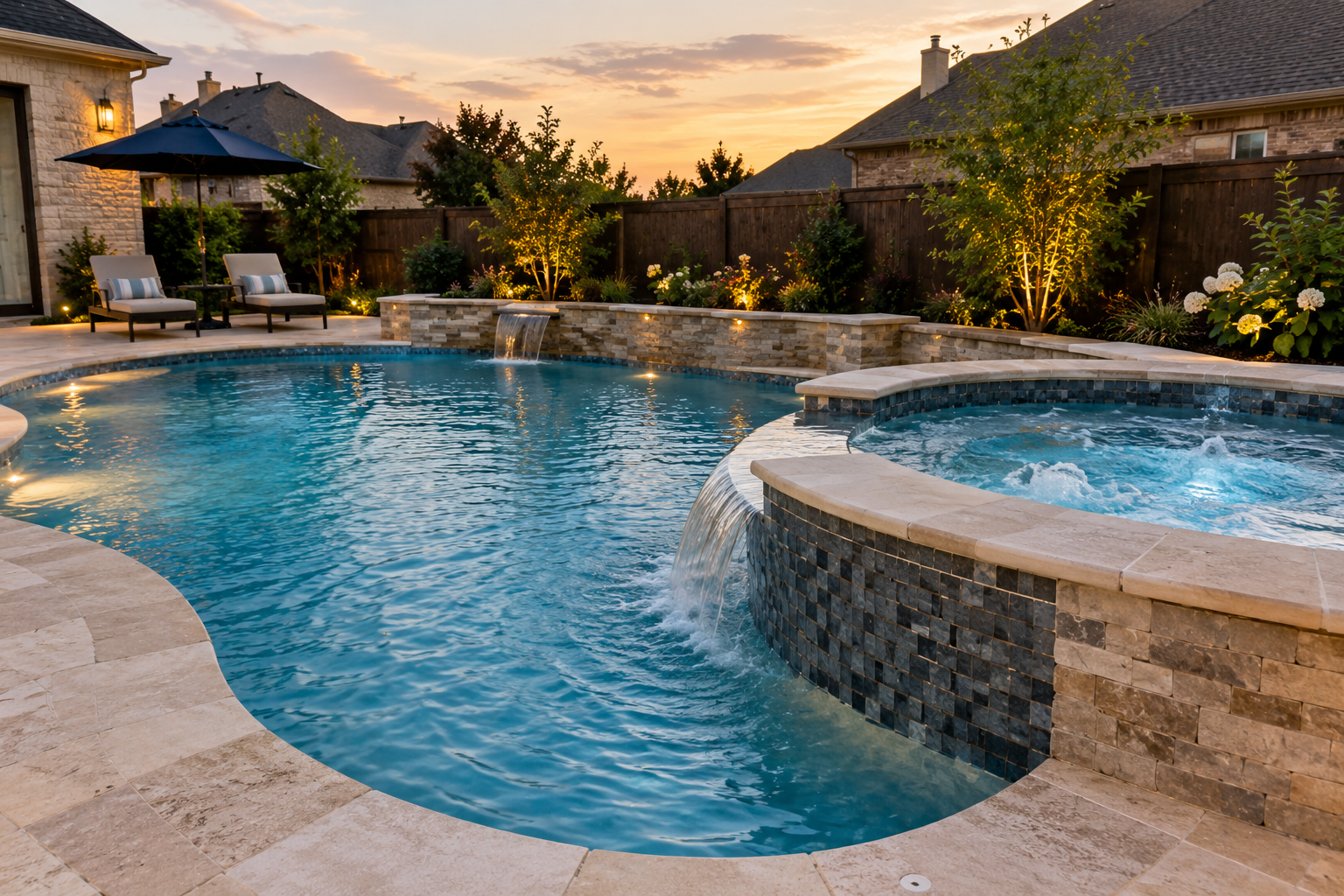
An attached spa isn’t just a hot tub dropped next to a pool. It’s designed as part of the pool structure, sharing walls, equipment, and circulation.
Placement Options
- Corner position: Tucks the spa into one corner of the pool, keeping it out of the main swim area
- Raised platform: Elevates the spa 12–18 inches above pool level with a spillover edge into the pool
- Flush integration: Builds the spa at pool level with a shared coping line for a seamless look
- Island design: Places the spa in the middle of a larger pool with access from multiple sides
In Dallas-area backyards, we usually recommend a raised corner spa with a spillover. It gives you better views, creates natural water movement, and makes it easier to keep spa water hot without overheating the pool.
Circulation and Heating
Most combos share a pump and filter but need a separate heater for the spa. The pool might stay at 82°F while the spa runs at 102°F. We use diverter valves to control which body of water gets heated at any given time.
Some clients want completely independent systems with separate pumps, filters, and heaters. That costs more upfront but gives you more control and faster heat-up times.
Design Features That Make Attached Spas Work
Spillways and Water Features
A spillway edge lets heated spa water cascade into the pool. It looks great, adds the sound of moving water, and helps equalize chemical levels between the two bodies of water. You can dress it up with tile, stone, or integrate it into a larger water feature design.
Seating and Jets
Most attached spas seat 4–6 people comfortably. We design built-in bench seating with strategically placed jets for neck, back, and leg massage. Deeper spas with molded seats feel more like traditional hot tubs. Shallower spas with wider benches work better for families with young kids or for entertaining.
Lighting and Fire Features
LED lighting transforms an attached spa at night. We often add perimeter lighting around the spa’s raised edge or underwater lights that create a glow effect. Some clients add fire bowls or a fire pit nearby to complete the resort feel.
When an Attached Spa Doesn’t Make Sense
Not every pool project needs an attached spa. If your backyard is tight and you’re already pushing the limits of what fits, adding a spa might compromise the pool itself.
Same goes if you’re on a fixed budget. Don’t sacrifice pool size, finish quality, or essential features like proper decking just to squeeze in a spa. Build the pool right first. You can always add a standalone spa later if your priorities change.
And if you’re planning to use the spa daily year-round, you might actually want a standalone unit with a dedicated heater and insulated cover. Attached spas lose heat faster because they share water with the cooler pool.
Timeline and Permitting for Pool-Spa Combos in Dallas
Building an attached spa doesn’t add much time to the overall construction timeline. It’s part of the same excavation, steel installation, and gunite shoot. Permitting in Dallas, Plano, Frisco, and McKinney treats it as a single structure, not two separate projects.
Expect the same 10–14 week timeline for a custom gunite pool with an attached spa.
Frequently Asked Questions
Can you add a spa to an existing pool later?
Yes, but it’s more expensive and disruptive than building them together. Adding a spa later means new excavation, jackhammering deck, tying into existing plumbing, and matching finishes that may no longer be available. If you think you’ll want a spa within the next five years, build it now.
Do pool-spa combos use the same water?
Most do. Water circulates between the pool and spa, which means they share the same filtration system and chemical balance. Some high-end designs use isolated systems with separate water, but that’s rare and more expensive to maintain.
How much does it cost to heat an attached spa in winter?
Heating costs depend on your heater type, spa size, and how often you use it. Gas heaters are common in North Texas because they heat water fast. Expect $75–$150 per month in winter if you’re using the spa several times a week. A spa cover helps reduce heat loss when not in use.
Can kids use an attached spa safely?
Yes, but you’ll want to adjust the temperature. Standard spa temperature is 102°F, which is too hot for young children. Most families lower it to 95–98°F when kids are using it. We also design wider bench seating and shallower depths for family-friendly spas.
What’s the best finish for a spa in Dallas?
PebbleTec or other aggregate finishes hold up well in spas because they resist staining and handle higher temperatures better than standard plaster. We’re one of the original certified PebbleTec applicators in North Texas. The texture feels good underfoot, and the finish lasts 15+ years.